Building authority online isn’t just about getting backlinks; it’s about creating a system where every link works together to strengthen your website’s foundation.
That’s where tiered link building comes in. It’s a layered strategy that doesn’t rely solely on one-way links to your pages but instead builds a structured network of backlinks that reinforce one another.
Picture it like a pyramid, your website sits at the top, while supporting links beneath it continually push relevance, trust, and authority upward.
When done right, this method helps your site rank more consistently, resist algorithm changes, and grow in search visibility over time.
In this guide, we’ll explore how tiered link building works, the structure of its layers, and how to apply it safely for lasting SEO results.
What is tiered link building?
Tiered link building is the practice of creating backlinks in multiple layers or “tiers.” Each tier of links passes value and authority (often called link juice) down to the layer beneath it, eventually strengthening the main website.

Quick fact:
According to research, 93.8% of link builders say that link quality matters more than link quantity.
Here’s how it works in simple terms:
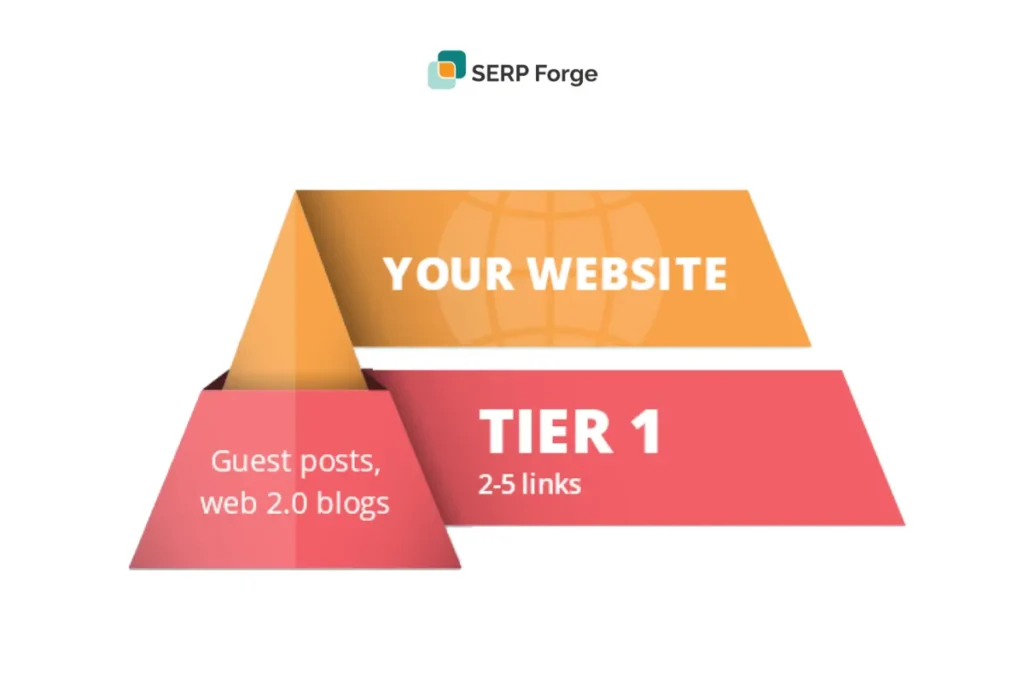
- Tier 1: Quality backlinks that point directly to your website.
- Tier 2: Backlinks that point to the pages containing your Tier 1 links.
- Tier 3: Backlinks that point to your Tier 2 links.
The idea behind layering links is to strengthen the pages that already link to you. When those pages gain more signals, they may pass a bit more value to your site. This approach is mainly used to diversify a backlink profile and add supportive links behind lower-authority placements.
However, experts in the SEO community have mixed opinions. Some believe tiered links can offer support when done naturally and with quality sources. Others feel the results are unpredictable and prefer sticking to direct outreach, digital PR, and relationship-based link building.
So while tiered link building can create a layered structure, it’s important to understand that its impact varies widely depending on execution, link quality, and Google’s changing guidelines.
Pro Tip: Think of your website at the top of a pyramid. Tier 1 links sit just under it, Tier 2 forms the layer below, and Tier 3 spreads across the bottom. Whether this structure is effective or not depends largely on how clean and relevant each layer is.
In short, tiered link building is a method some marketers use to support their main backlinks but it’s not universally recommended. It’s helpful to know both sides before deciding if it fits your strategy.
Why tiered link building works
Search engines often view backlinks as signals of relevance and credibility, but not all links carry the same influence. Earning strong, direct links from reputable websites can be challenging and may not happen consistently for every site.
This is where some marketers consider using tiered link building. Instead of relying only on direct backlinks, they add supporting links to the pages that already point to their site.
The idea is that when those referring pages receive additional signals, they may pass on slightly stronger value in return.
Marketers who use this approach generally aim to:
- Add more diversity to their backlink profile
- Strengthen the pages linking to them
- Create supporting layers to reduce reliance on a few primary links
- Maintain stability during fluctuations or updates
That said, tiered link building doesn’t work the same way for everyone, and its impact can vary based on quality and execution.Some prefer to focus solely on methods like outreach and relationship-building, while others explore tiered structures as an additional tactic.
Ultimately, it’s up to you to decide whether this approach aligns with your strategy, resources, and risk comfort.
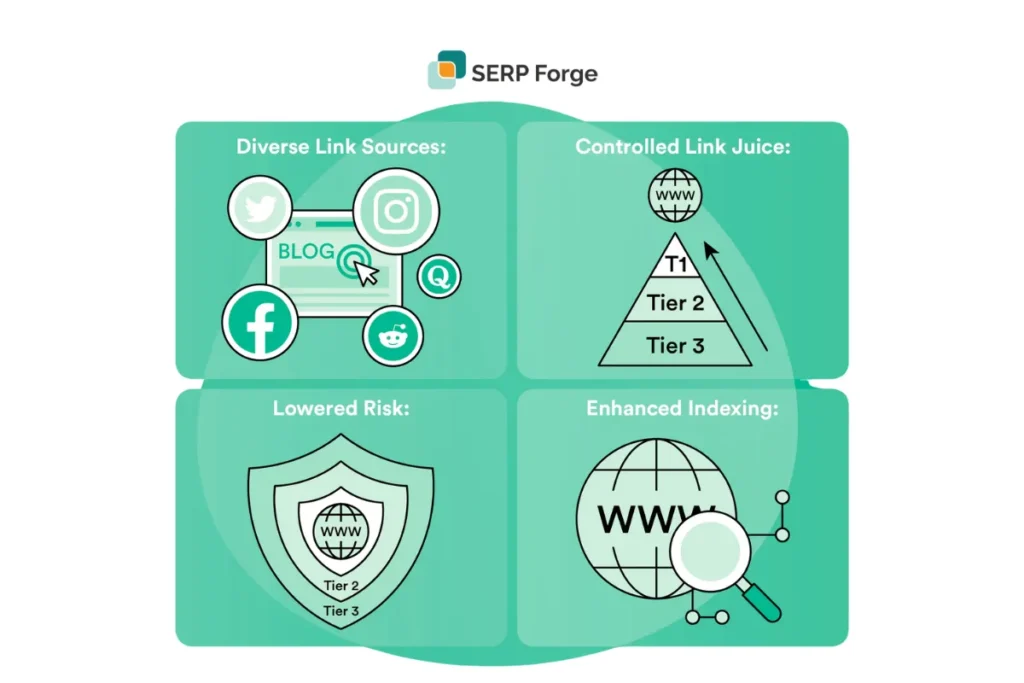
Understanding your backlink profile
Before diving into tiers, it helps to understand what a backlink profile is.
A backlink profile includes all the websites that link to yours. Search engines evaluate your backlink profile based on several factors:
- Quantity: The total number of backlinks
- Quality: The authority and trust of linking websites
- Relevance: How closely linked content matches your niche
- Diversity: A mix of domains, anchor texts, and sources
Ahref’s real-world test found that disavowing 3,476 links caused measurable drops in traffic and keyword rankings, demonstrating that links (and their quality) still influence performance.
A healthy backlink profile looks balanced; it includes links from different sites, varying anchor texts, and multiple content types. Tiered link building helps achieve this naturally.
The three layers of tiered link building
Let’s break down each layer in detail.
Tier 1: High-quality primary links
Tier 1 backlinks are the foundation of your SEO. These are the links that point directly to your website. Because they have the most visible impact on rankings, quality here is more important than quantity.
This topic is being discussed heavily in communities too.
In one Reddit thread, founders of AI and SaaS startups mentioned that they were relying only on content, skipping link-building entirely.
But many replied saying they still saw stronger results when backlinks were part of the strategy, especially editorial links and guest posts.
The overall sentiment was clear: content helps you get discovered, but backlinks help you compete.
What makes a good tier 1 link?
A high-quality Tier 1 backlink typically:
- Comes from a relevant and authoritative website
- Is placed within meaningful, original content
- Uses natural and context-rich anchor text
- Adds value for readers
- Is do-follow (passes link equity)
For example, if you run a marketing agency and get featured in a well-known publication discussing SEO strategies, that link would serve as a strong Tier 1 backlink.
social media links, forums, and various submission links — not high-authority sites like Forbes, HubSpot, or Entrepreneur.
When you earn links from top-tier domains such as Forbes or HubSpot, you don’t need tiered link building to strengthen them. These links hold strong authority on their own and don’t require additional supporting layers.
Tiered link building is mainly used to amplify lower-authority links, not premium editorial backlinks.
Even if your site is newer, a DR 30–40 link from a niche-relevant industry blog can still make a difference.
Action step:
Start by identifying 3–5 top-tier websites in your industry. Reach out with:
- Guest post pitches
- Thought leadership articles
- Case studies or data-driven insights
These relationships form the foundation of your first tier.
Why do-follow links matter?
Search engines recognize two main link types:
- Do-Follow: These pass link equity (ranking value) from one site to another.
- No-Follow: These tell search engines not to pass authority.
Tier 1 links should primarily be do-follow, as they have a direct influence on rankings. A few no-follow links are natural and fine, but they don’t deliver as much SEO benefit.
Tier 2: Supporting links
Tier 2 backlinks link to the pages that already link to your site. In other words, they don’t link to your main website directly; they strengthen the Tier 1 backlinks instead.

For example, suppose your website is mentioned in an article on a marketing news site. You could then build second-tier links pointing to that article through:
- Guest posts on smaller but relevant blogs
- Mentions in industry directories
- Press releases featuring your Tier 1 content
- Articles on niche community websites
These Tier 2 links make your Tier 1 links stronger by sending them more authority. You don’t need them to be as high-quality or as authoritative as Tier 1 links, but they should still be relevant and natural.
Action steps:
- List all your Tier 1 backlinks.
- Use tools like Ahrefs to find related sites that can naturally reference those Tier 1 articles.
- Create useful, shareable content such as summaries, reactions, or follow-up posts, and link to your Tier 1 content.
💡 Pro tip: A good ratio is about 8–12 Tier 2 backlinks for every Tier 1 link. So if you have three top-tier links, aim for around 25–30 second-tier backlinks supporting them.
Example
Let’s say a software review site publishes a feature about your product (Tier 1 link). Then, a smaller tech blog writes an article referencing that review. That new article becomes a Tier 2 link and reinforces the Tier 1 source that’s already linking to you.
Over time, these supporting links help improve the credibility and visibility of your Tier 1 sources, which in turn passes more ranking power to your website.
Tier 3: Volume-based links
Tier 3 links are built to support your Tier 2 backlinks. These are usually lower-quality or less authoritative sources that still pass minor link equity up the chain.
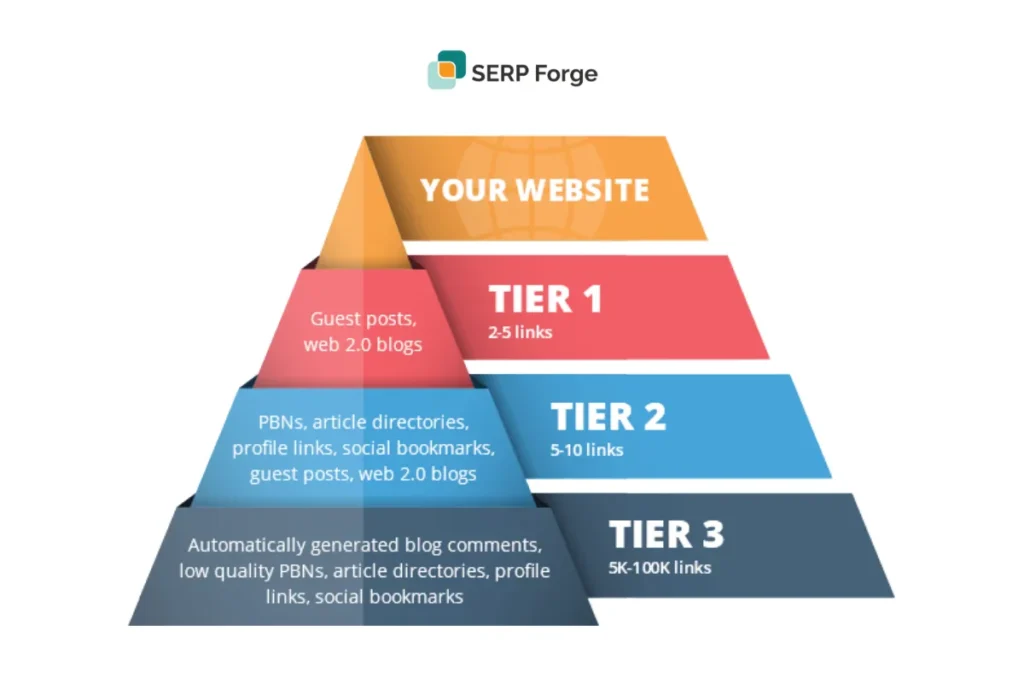
Common Tier 3 link sources include:
- Blog comments
- Forum posts
- Social media shares
- Web 2.0 blogs
- Content syndication platforms
At this level, quantity matters more than quality. The goal is to send additional signals of engagement and trust to your Tier 2 links, helping them rank higher and drive more link juice upward..
Example:
If your Tier 2 link appears in a guest post, you might share that guest post on Reddit, Quora, Pinterest, and niche Facebook groups to increase its visibility.
Action steps:
- Use tools like Quora, Reddit, and Pinterest to distribute Tier 2 content.
- Leave genuine comments on relevant blogs or forums with contextual mentions.
- Avoid spammy link drops; each mention should add value to the discussion.
💡 Fun fact: Some marketers experiment with a fourth or fifth tier, but the benefits drop sharply with each additional layer.
Google’s algorithms are more likely to ignore extremely distant backlinks, so most effective strategies stop at Tier 3.
Tactics to avoid in tiered link building
While tiered linking can work wonders when done carefully, it can also backfire if you use risky or spammy tactics.
Avoid the following practices:
- Spammy blog comments: Posting irrelevant or low-effort comments on random sites just to drop links can trigger spam filters.
- Private Blog Networks (PBNs): Networks built solely for selling backlinks are against Google’s guidelines. Links from PBNs backlinks can cause manual penalties.
- Cloaking: Showing different content to users and search engines is deceptive and can lead to penalties.
- Buying cheap, low-quality links: Paid links from irrelevant or poorly maintained websites do more harm than good.
Search engines are sophisticated enough to detect manipulative link patterns. It’s better to stay consistent with white-hat methods, building links that genuinely add value.
💡 Action step: Before building any link, ask: “Would this link make sense to a real reader?” If the answer is no, skip it.
Focus on white-hat techniques
Sustainable link building starts with quality content and authentic relationships.
The foundation of any long-term strategy lies in white-hat link-building methods that comply with Google’s guidelines and focus on earning links naturally through value-driven content, credibility, and trust.
Let’s explore a few safe and effective ways to build links across your tiers.
1. Create content worth linking to
Your first priority should be to produce content that other websites naturally want to link to. That means publishing pages that are original, helpful, and full of insight.

High-value content is:
- Informative and specific: It solves real problems and offers fresh perspectives.
- Data-driven: Uses statistics or research to back claims.
- Well-written and structured: Clear formatting makes it easier to read and share.
- Visually appealing: Including images, infographics, and charts boosts engagement.
💡 Example:
A marketing blog publishing a “[year] SEO Trends” report will naturally attract Tier 1 backlinks from journalists and Tier 2 links from bloggers referencing it.
Action step:
Repurpose your top-performing content into infographics or short videos that are easy for others to share and link back to.
💡 Pro tip: Turn your blog posts into infographics or short videos. Visual assets attract links from bloggers and publishers looking for quick, credible references.
In short, high-quality content earns links on its own because it informs, inspires, and adds real value. Consistent, data-backed publishing keeps your brand visible and link-worthy across the web.
Need help building content that attracts backlinks naturally? Explore our content marketing services to provide SEO-friendly blogs, guides, and visuals that drive measurable growth.
2. Use guest posting strategically
Guest posting remains one of the best ways to earn contextual, relevant backlinks. When you publish valuable content on reputable guest posting sites, you not only secure a high-quality backlink but also reach a wider, more targeted audience.
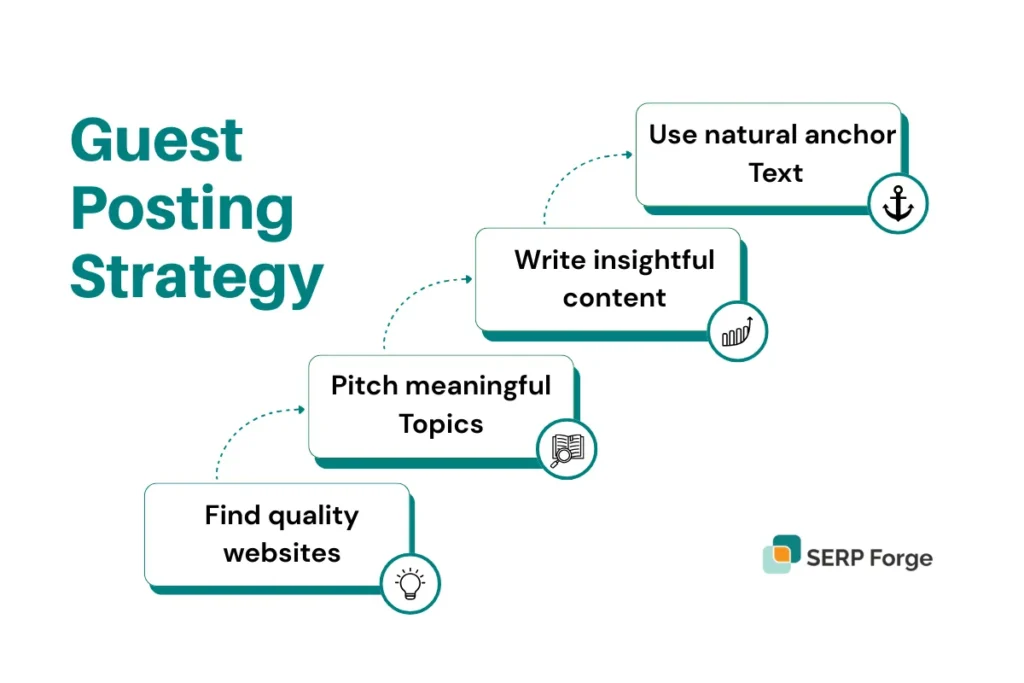
Here’s how to do it right:
- Find quality websites that align with your niche and publish consistent, original content.
- Pitch meaningful topics that fit their audience and editorial style.
- Write insightful content, don’t make your post overly promotional.
- Use natural anchor text that fits smoothly within your article.
For example, if you run a travel blog, writing for a lifestyle or adventure website with high domain authority can be an ideal Tier 1 opportunity. On the other hand, publishing on smaller travel forums or community blogs could serve as Tier 2 support.
Action step:
Create a list of 15–20 potential guest posting sites with different authority levels (high for Tier 1, moderate for Tier 2).
3. Target sites with genuine authority
Authoritative websites carry more trust and influence. Search engines recognize these domains as reliable sources of information, which makes their backlinks more valuable.
When identifying target websites for your outreach, look for those that:
- Are relevant to your industry
- Publish fresh, high-quality content
- Have an active audience
- Maintain a clean backlink profile themselves
Examples: Let’s say you own a bakery. Here’s how you can find potential linking partners:
- Food bloggers: Collaborate on recipes or baking guides.
- Recipe sites: Contribute original recipes with backlinks to your site.
- Event and party blogs: Offer dessert ideas for celebrations.
- Parenting sites: Share simple, kid-friendly baking projects.
Each of these examples builds relevance and authority while keeping your backlinks natural.
Action step:
Use tools like Ahrefs to check before outreach. Aim for DR 50+ for Tier 1 and DR 20–40 for Tier 2.

4. Diversify your link sources
A diverse backlink profile looks natural to search engines. Try mixing link types from different platforms, such as editorial mentions, directories, social posts, and collaborations.
Action step:
Create a monthly goal of earning links from at least 3 different types of sources:
You don’t need hundreds of identical links from one source. Instead, aim for variety in domain types, content formats, and anchor texts.
5. Keep quality in check
Even when building Tier 2 or Tier 3 links, don’t compromise on basic standards. Low-effort content or spammy links can dilute your entire backlink structure.
Before creating or placing a backlink, always check:
- Is the website indexed and active?
- Is the content relevant to your niche?
- Does the link fit naturally within the text?
Sustainable link building takes time but delivers long-term SEO stability.
Final thoughts
Tiered link building isn’t about chasing numbers; it’s about building a layered web of trust and authority.
When done with strategy and patience, it can:
- Strengthen your domain authority
- Boost organic traffic
- Improve ranking consistency
However, the secret lies in striking a balance between quality and quantity, focusing on genuine relevance, and adhering to ethical SEO practices.
Each link you build today becomes a stepping stone for tomorrow’s rankings.
FAQ’s About Tiered Link Building
Can I automate tiered link building?
While automation tools exist, they often create low-quality links that may hurt your site. Manual outreach and curated placements are far safer.
Is Tier 3 necessary?
It depends on your goals. Tier 3 helps amplify the effect of Tier 2, but if your first two tiers are strong enough, you may not need an extensive third layer.
How many tiers are effective?
Most professionals stick to three tiers. Beyond that, link equity becomes too diluted and difficult to manage.
Do tiered backlinks help new websites rank faster?
They can indirectly boost the strength of your early Tier 1 backlinks. But for brand-new sites, it’s smarter to focus first on content, digital PR, and a few solid Tier 1 links before building any second or third layers.
Can tiered link building replace normal outreach?
No. Tiered links are supporting signals, not primary ranking drivers. You still need strong Tier 1 links from outreach, guest posts and industry mentions. Tiered structures simply help those main links perform better.
Do no-follow links matter in tiered link building?
Yes, especially in Tier 2 and Tier 3. No-follow links add diversity and help your backlink pattern look natural. They may not pass full authority but they still contribute signals like visibility and engagement.