Creating listicles isn’t the hard part. Creating listicles that actually perform is.
Most people don’t struggle with ideas; they struggle with choosing the right format and knowing how to make it engaging. That’s where this guide helps.
Instead of throwing random list ideas at the wall, this post breaks down 15 proven listicle types that consistently attract clicks, engagement, and search traffic across blogs, SaaS content, newsletters, YouTube, and social platforms.You’ll also learn practical ways to improve engagement so your listicles don’t just get published, they get read, saved, and shared.
Let’s jump in.
15 Common Listicle Types That Always Perform Well
When people search for listicle ideas, they’re usually looking for proven list formats they can use right away. Before getting creative with techniques, it’s important to understand the core listicle types that consistently attract clicks, engagement, and search traffic.
These formats work across blogs, SaaS content, marketing sites, YouTube, newsletters, and social media.
1. How-To Listicles
How-to listicles break down a process into clear, easy steps. They’re popular because they help readers solve a problem quickly without reading long guides.
When to use:
- Tutorials
- Educational content
- Beginner-focused topics
Examples:
- 7 Steps to Build a SaaS Landing Page
- 9 Ways to Improve Page Speed Without a Developer

These listicles curate tools, software, or products in one category. They perform well because users actively search for recommendations before making decisions.
2. Best Tools or Product Listicles
These listicles curate tools, software, or products in one category. They perform well because users actively search for recommendations before making decisions.
When to use:
- SaaS and tech content
- Product comparisons
- Buyer-intent keywords
Examples:
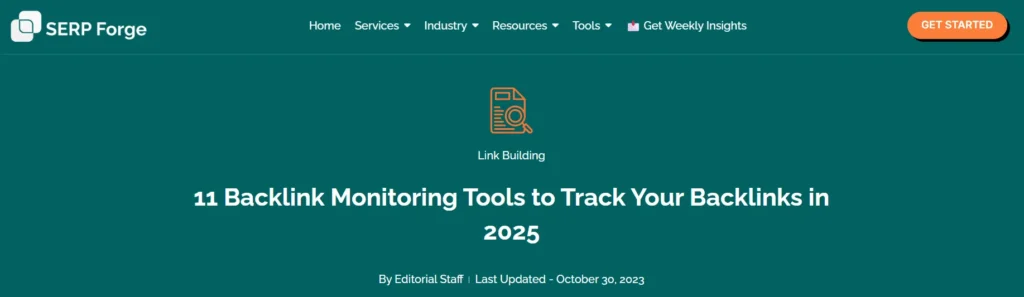
- 11 Backlink Monitoring Tools to Track
- 12 CRM Tools Sales Teams Actually Use
3. Alternatives Listicles
Alternatives listicles target users who are dissatisfied or exploring other options. They often rank well because they capture comparison and switching intent.
When to use:
- Competitive niches
- High-intent keywords
- Product-led content
Examples:
- 11 Budget-Friendly Semrush Alternatives
- 11 Slack Alternatives for Growing Companies

4. Tips & Quick Wins Listicles
These focus on short, actionable advice readers can apply immediately. They’re easy to skim and highly shareable.
When to use:
- Blogs and newsletters
- Social media repurposing
- Engagement-driven content
Examples:
- 15 Quick SEO Tips That Actually Work
- 9 Content Writing Tips for Better Engagement

5. Mistakes or Fix-Based Listicles
This format highlights common mistakes and explains how to fix them. It works because readers naturally want to avoid errors.
When to use:
- Educational content
- Mid-funnel topics
- Authority-building posts
Examples:
- 33 Link Building Mistakes to Avoid
- 10 SEO Errors Most New Websites Make

6. Pain-Point Focused Listicles
Pain-point listicles speak directly to your audience’s struggles. They create instant relevance and emotional connection.
When to use:
- Customer-focused content
- Problem-aware audiences
- Conversion-focused blogs
Examples:
- 9 Challenges Every SaaS Founder Faces Early On
- 11 Problems Content Teams Struggle With Daily

7. Stats and Facts Listicles
These listicles compile data, research, or industry numbers. They build trust and are often referenced or shared by others.
When to use:
- Thought leadership
- Link-worthy content
- Industry analysis
Examples:
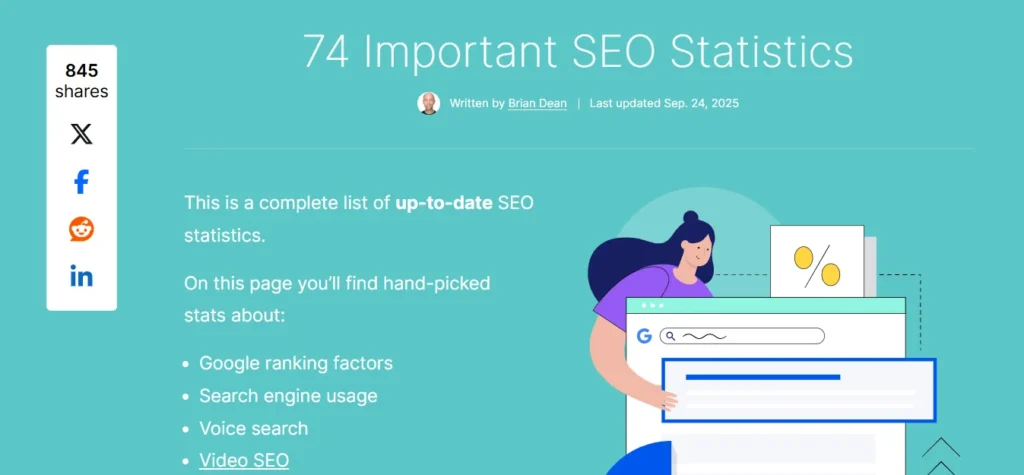
- 20 SEO Statistics That Matter in [year]
- 15 Content Marketing Facts Backed by Data
8. Do’s and Don’ts Listicles
This format offers clear guidance by showing what to do and what to avoid. It’s especially useful for beginners.
When to use:
- Educational topics
- Best practices
- Compliance-related content
Examples:
- SEO Do’s and Don’ts for Small Businesses
- Email Marketing Do’s and Don’ts You Should Follow

9. Comparison or “Vs” Listicles
Comparison listicles help users decide between two or more options. They work well for commercial and decision-stage searches.
When to use:
- Buyer intent keywords
- Product evaluation content
Examples:
- Shopify vs WooCommerce: 9 Key Differences
- Ahrefs vs Semrush: Which Tool Is Better?

10. Examples or Inspiration Listicles
These show real-world examples that readers can learn from or copy. They’re popular in design, marketing, and content niches.
When to use:
- Creative industries
- Visual content
- Idea inspiration
Examples:
- 12 Landing Page Examples That Convert
- 10 Email Campaign Examples That Drive Clicks

11. Templates and Framework Listicles
Template-based listicles offer ready-to-use formats, making them highly practical and saving readers time.
When to use:
- Content marketing
- Business processes
- Repeatable workflows
Examples:
- 21 Outreach Email Templates
- 5 Content Frameworks Used by Top Marketers

12. Opinion-Based Listicles
These listicles share informed opinions based on experience or insight. They work best when backed by reasoning, not hype.
When to use:
- Thought leadership
- Personal or brand voice content
Examples:
- 9 Marketing Tactics That Still Work Today
- Black Hat Link Building Tactics
- 7 SEO Myths You Should Stop Believing

13. Beginner-Friendly Listicles
Designed for newcomers, these simplify complex topics into digestible points.
When to use:
- Educational hubs
- Awareness-stage content
Examples:
- SEO Basics: 10 Things Beginners Must Know
- Content Marketing 101: 8 Core Concepts Explained

14. Advanced or Expert-Level Listicles
These targets are experienced readers and go deeper into strategy, tools, or execution.
When to use:
- Advanced audiences
- Authority-building content
Examples:
- 11 Advanced Technical SEO Techniques
- 9 Growth Strategies Used by SaaS Leaders

15. Trend-Based or Yearly Listicles
Trend-based listicles focus on what’s changing and what’s next. They’re highly clickable and time-relevant.
When to use:
- Seasonal content
- Industry updates
Examples:
- 8 Content Marketing Trends to Watch in [year]
- 10 SaaS Growth Trends Shaping the Future

How Can You Increase Engagement in Listicles?
High-performing listicles don’t rely on long explanations or too many ideas.
They work because they use a few clear techniques that keep readers scrolling, interacting, and finishing the list.
Below are 10 simple ways to increase engagement in your listicles without adding clutter.
1. Use Images Inside Your Listicle
Images break long blocks of text and make listicles easier to scan. They help readers process information faster and reduce drop-offs.
Use visuals to support the point, not distract from it.

2. Add Polls Inside Your Listicle
One of the simplest ways to generate fresh listicle ideas is to ask your audience directly.
Polls on LinkedIn, X, Instagram, or your email list can reveal exactly what topics your SaaS or tech audience wants next.
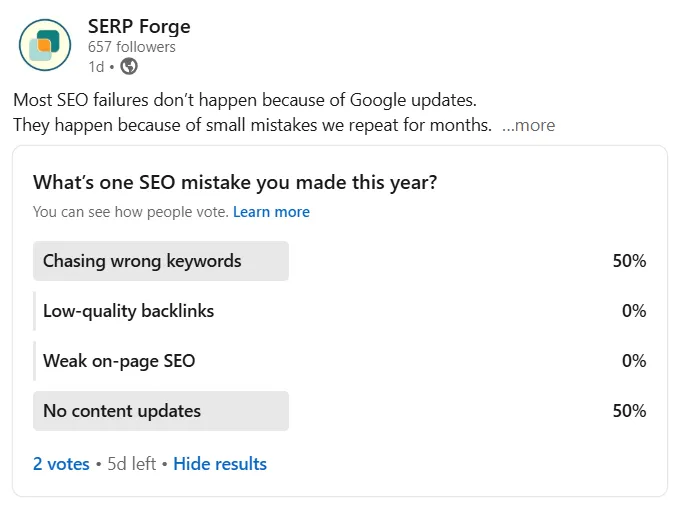
These responses often turn into listicles that feel custom-made for your community.
3. Turn Trending News Into Listicle Topics
Trending stories are perfect for creating timely, high-engagement listicle ideas. When a topic starts gaining traction, you can turn it into quick, relevant listicles your audience will want to click immediately.
According to the research, live blogs (a close cousin of news-driven listicles) have a median Average Engaged Time of 48 seconds, compared with 28 seconds for average content, i.e., timely pieces can hold readers 70% longer.
Use Google Trends.

4. Interview Subject-Matter Experts
Speaking with subject-matter experts is one of the most reliable ways to uncover valuable listicle ideas.
Experts often share insights, trends, and behind-the-scenes knowledge that your audience can’t find anywhere else. Their responses can easily be transformed into highly targeted listicles.

SME insights help you create listicles that feel authoritative, trustworthy, and backed by real-world experience.
5. Study Meta Ad Library
The Meta Ad Library is a goldmine for uncovering listicle topics that are already performing well. Competitors don’t promote content unless it delivers results, so their ads can point you to high-impact listicle ideas.

Ads reveal what audiences respond to, which makes ad-backed listicles some of the safest, highest-performing topics you can create.
6. Use a Content Idea Generator
Content idea generators can quickly spark fresh listicle ideas, especially when you’re stuck.
Tools like Ahrefs help you discover trending subtopics, related questions, and emerging themes you can easily turn into listicles.
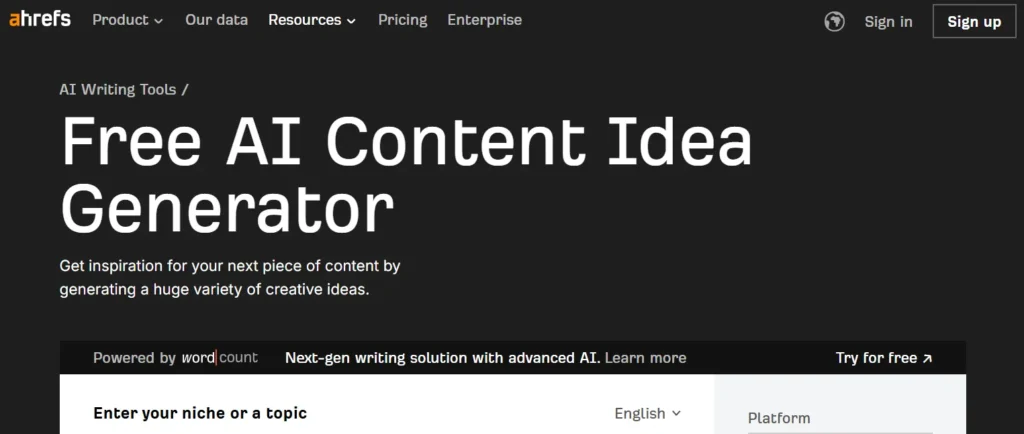
Just enter a broad topic like SaaS growth, product analytics, or cloud tools and pick angles that naturally fit into listicle formats.
7. Use Reddit-Based Keyword Insights
The Reddit keyword tool, like Highervisibility, is one of the fastest ways to uncover listicle ideas rooted in real user discussions.

Reddit communities (subreddits) are full of people sharing frustrations, hacks, opinions, and discoveries. These naturally turn into listicles because they already appear in list-like formats, comparisons, or repeated themes.
8. Spy on Competitor’s Top-Performing Content
One of the fastest ways to come up with high-performing listicle ideas is to analyze what’s already working for your competitors.
If a competitor ranks well for a certain topic, there’s a good chance their audience and yours are interested in similar angles.
Start by checking their most-viewed blog posts, YouTube videos, or high-engagement social content. Look specifically for list-style formats or topics that can easily be turned into listicles.

Studying what performs well for others helps you identify proven content angles, and then you can create your own listicles with better depth, fresher ideas, or a more unique perspective.
9. Browse Podcast Titles and Descriptions
Podcast episodes are a goldmine for listicle ideas because each episode title usually highlights a problem, curiosity, or niche topic your audience cares about.
A quick scroll through podcast titles in your industry can instantly spark dozens of listicle angles.

Podcast descriptions often include key points discussed in the episode. Turn those points into list items, comparisons, or tips. It’s one of the fastest ways to mine ready-made listicle topics without starting from scratch.
10. Use Exploding Topics
Exploding Topics helps you spot rising trends before they become mainstream, perfect for listicles that are timely, fresh, and easy to rank for.

By jumping on a trend early, your listicles can rank faster, attract more clicks, and position your brand as an early expert in emerging topics.
Conclusion
Strong listicles don’t perform well by accident. They work because they follow proven formats that match how people search, read, and make decisions online.
The 15 listicle types covered in this guide give you a reliable foundation to create content that attracts clicks, keeps readers engaged, and fits naturally into blogs, SaaS content, newsletters, social media, and video platforms.
Once you understand which listicle type fits your goal, awareness, engagement, or conversion, creating content becomes faster and more strategic.
The key isn’t writing more listicles. It’s choosing the right listicle type, keeping it clear, and pairing it with engagement elements like visuals, polls, and timely angles.
If you want help creating structured, SEO-friendly listicles and content that fits into a larger content strategy, we can help you plan, write, and scale content that actually performs. Contact us today.
FAQ’s
How do I know which listicle ideas will actually perform well?
Look at what your audience is already engaging with. Check your analytics, social media comments, top-performing posts, and competitor content. If a topic already attracts clicks or questions, turning it into a listicle usually performs even better.
Can I use the same listicle idea for blogs, YouTube, and social media?
Yes! One strong listicle idea can be repurposed across multiple formats. For example, a “10 Tools” blog can become a YouTube review, a LinkedIn carousel, several X posts, or even a short Instagram reel.
How often should I post listicles for the best results?
There’s no fixed rule, but many creators publish 1–2 listicles every week because they’re fast to produce and consistently attract traffic. Focus on quality and relevancy instead of rigid posting frequency.
What should I do if I’m running out of good listicle ideas?
Use idea sources that never dry up: Reddit threads, Google’s People Also Ask, competitor YouTube videos, trending Product Hunt launches, or audience polls. These places get updated every day, so you’ll always find new angles.
Is it okay to create listicles on trending topics even if I’m late to the trend?
Yes, as long as your listicle adds a new perspective. Trends move fast, but people still search for summaries, lessons, roundups, and breakdowns even after the main buzz ends. Just make your angle useful, specific, and easy to skim.