


In SaaS, you don’t get growth by chance. You need a clear system to drive traffic, signups, and recurring revenue.
Many SaaS companies publish blogs, post on LinkedIn, and target a few keywords. Yet traffic slows down and Customer Acquisition Cost (CAC) keeps increasing. The problem is not effort; it’s a lack of structure.
With a strong content strategy, you can attract qualified traffic, guide users through the customer journey, and turn demand into predictable growth.
Instead of publishing randomly, you build a system aligned with search intent, funnel stages, and product positioning.
Let’s break it down step by step.
What Is a Content Strategy?
Content strategy is the process of identifying your target audience’s problems and the solutions they actively search for across platforms, then capturing those demand gaps with relevant content.
It involves understanding user pain points, creating helpful resources such as:
- Guides
- Blogs
- Tutorials
- Insights
And using that content to solve problems while positioning your product or service as the solution.
Why Do SaaS Companies Need a Content Strategy?
A structured content strategy brings clarity to your content efforts. It helps you decide what to create and who it is for.
It also keeps your content aligned with user intent and business goals.
For Software as a Service businesses, growth depends on reaching users at the right stage of their journey. Creating content without a clear plan may bring visibility, but it won’t deliver consistent results or support long-term growth.
A structured content strategy brings clarity and direction. It helps you focus on what to create, who it is for, and how it supports your business goals.
It also ensures your content is aligned with user intent and decision-making stages.
With a clear strategy, you can:
- Attract high-intent traffic instead of random visitors
- Improve conversion rates by guiding users through the funnel
- Reduce customer acquisition cost (CAC) over time
- Build trust and authority in your niche
- Identify and fill content gaps across the customer journey
- Support product adoption with educational, use-case-driven content
When done right, your content reaches users at the right time, solves real problems, and positions your product as the natural next step.

What Is the SaaS Customer Journey and Why Does It Matter?
For Software as a Service businesses, users rarely discover a product and sign up immediately. They move through a series of steps before becoming customers and, eventually, advocates. This flow is known as the customer journey map.
In SaaS, this journey typically follows five key stages. Each stage reflects a shift in user intent and decision-making.
The Customer Journey Map stages include:
- Awareness: Users realize they have a problem or discover that solutions like your product exist
- Consideration: Users compare different options and evaluate which solution fits their needs
- Purchase: Users decide to subscribe and become paying customers
- Retention: Users continue using your product and contribute to recurring revenue
- Loyalty: Users stay long-term and recommend your product to others
Understanding this journey helps you create content for each stage. It ensures your SaaS stays visible, useful, and relevant from the first search to long-term usage.
Insights:
63% of customers consider the onboarding period when deciding to subscribe, showing how early experience impacts purchase decisions.
Pro Tip:
If your content only targets awareness, you miss users evaluating solutions. Strong SaaS strategies support Top of Funnel (TOFU), Middle of Funnel (MOFU), and Bottom of Funnel (BOFU) stages.
How to Create a SaaS Content Strategy in 7 Steps?
A practical, step-by-step framework to build a scalable, full-funnel SaaS content engine that drives traffic, signups, and recurring revenue.
Step 1: Identify Your Customers
Start by clearly defining who your ideal customer is. Focus on identifying the type of companies and people who benefit most from your product.
Define key attributes such as:
- Industry and company size
- Job roles and decision-makers
- Core challenges and goals
- Buying context and priorities
This step is about narrowing your focus to the right customers, not everyone.
A clear ICP ensures your product, messaging, and strategy are built for a specific audience.
Step 2: Identify Pain Points & Brainstorm Content Ideas
Identify real customer problems by analyzing how users search, ask questions, and interact with solutions.
Sources to find pain points:
- Google search (autocomplete, “People Also Ask”, related searches)
- Communities (Reddit, Quora, Slack groups, LinkedIn)
- Reviews (G2, Capterra, app stores)
- Competitor content (blogs, landing pages, FAQs)
- Sales and support data (questions, objections, tickets)
Look for patterns such as:
- Problems users want to solve
- Tasks they are trying to complete
- Frustrations with existing tools
- Missing features or gaps
Convert each pain point into a content idea. Focus on collecting and organizing problems, don’t finalise keywords or structure yet.
Step 3: Conduct Keyword Research
Keyword research is the process of validating your content ideas using real search demand.
At this stage, map your ideas across TOFU, MOFU, and BOFU, then analyze each keyword using tools like Ahrefs or Keywords Everywhere.
Focus on search volume, relevance, and intent to ensure your topics align with what users are actively searching.
This helps you:
- Validate ideas with real data
- Prioritise topics with actual demand
- Align content with funnel stages
- Avoid creating content blindly
Step 4: Build Topic Clusters and Content Pillars
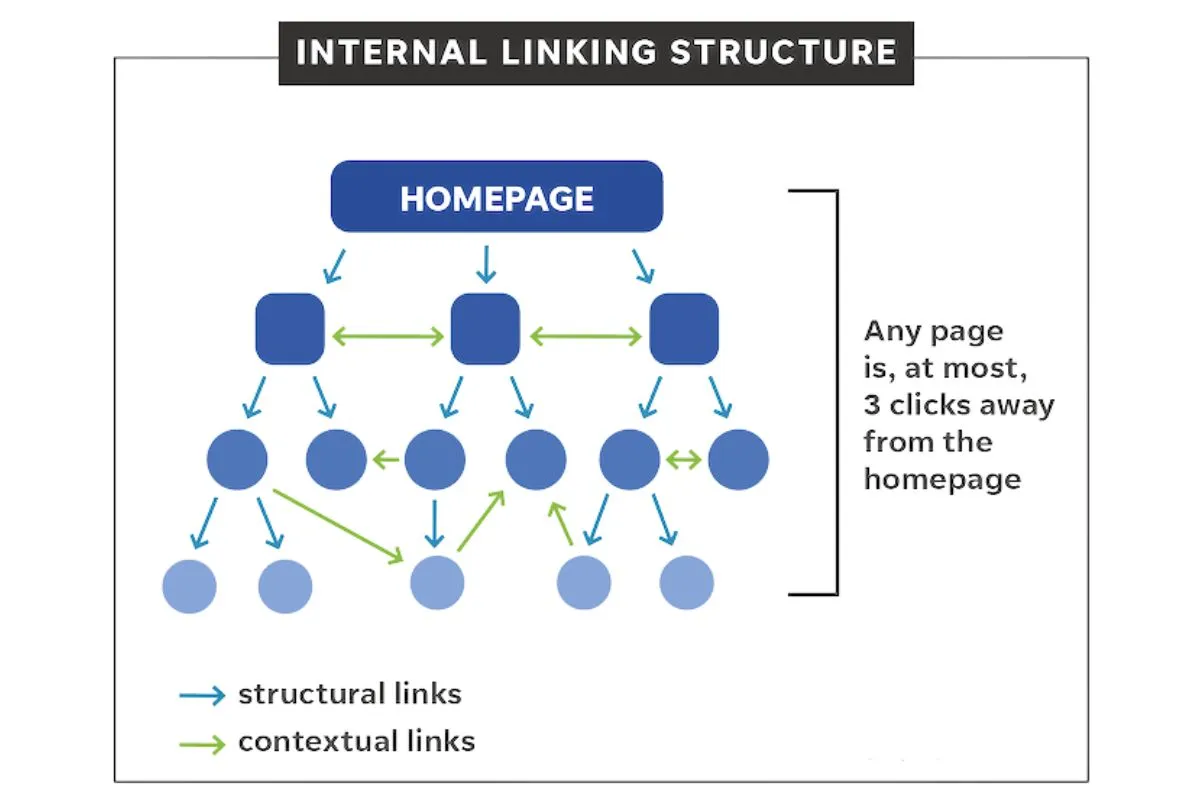
Topic clusters organize your content into structured groups around a central pillar page.
After keyword research, group related topics under a main theme and connect them through internal links. Each cluster page supports the pillar and reinforces topical relevance.
This approach helps you:
- Replace isolated content with connected systems
- Improve internal linking and navigation
- Build topical authority in your niche
- Guide users to relevant content
Once your clusters are live, a SaaS content audit helps you identify which pages are performing and which need updating, merging, or removal.
As search evolves (voice search, AI-driven queries), structured and semantically connected content becomes essential for visibility.
According to Neil Patel, search behavior shifts with nearly 20% of users using voice search, and AI search adoption is projected to reach 36% globally by 2028.
Step 5: Prepare a Topical Map
A topical map is a hierarchical blueprint of your entire content ecosystem.
It organizes your content into parent topics, subtopics, and deeper layers, showing how everything connects.
Topics at the same level act as related groups, helping you visualize and scale your strategy without gaps.
A strong topical map includes:
- Central entity: Your SaaS category or product
- Search intent: Why users search
- Attributes & semantic context: Key concepts around the topic
- Core content: Essential pages to cover
- Supporting content: Authority-building topics
This helps you:
- Define a clear and scalable content structure
- Plan logical URLs and site hierarchy
- Enable strong internal linking
- Expand content systematically
Step 6: Create Product-Led Content
Product-led content solves user problems while naturally positioning your SaaS as the solution.
It connects customer pain points with your product’s value without forcing promotion.
Structure your content in this sequence:
- Problem
- Context / Education
- Solutions
- Product introduction
- Product walkthrough
- Call to action (CTA)
This ensures your content:
- Provides real value
- Aligns with user intent
- Drives signups, activation, and adoption
Step 7: Optimize for SEO and Conversions
Optimization ensures your content ranks in search and converts traffic into users.
Focus on:
- On-page SEO (titles, headings, keyword placement)
- Semantic depth and content structure
- Internal linking and topical relevance
- Clear CTAs and product integration
- Page experience (speed, readability, UX)
Once your structure is set, the words determine conversions. Our saas copywriting guide covers frameworks to write CTAs, headlines, and product messaging that drive action
This improves both visibility and conversion performance.

Step 8: Measure and Improve Performance
Measuring performance helps you refine and scale your strategy over time.
Track:
- Traffic and keyword rankings
- Engagement (time on page, behavior)
- Conversion rates and signups
- Performance across funnel stages
Use these insights to:
- Update and improve existing content
- Identify gaps and new opportunities
- Optimize underperforming pages
- Scale what drives results
Case Study: Hotjar’s Full Funnel SaaS Content Strategy
To understand how all of this works in practice, let’s look at a full-funnel SaaS content structure using a topical map framework.
In this example, we analyze the content ecosystem of Hotjar as a structural model.
Instead of publishing isolated blog posts, Hotjar’s topical map builds content around clear pillars such as heatmaps, session recordings, and user behavior analytics, then expands each pillar with supporting guides, comparisons, use cases, and integration pages.
This layered structure connects educational content to product pages, ensuring traffic flows naturally from discovery to evaluation and conversion.
The purpose of this case study is to show how a well-planned topical map transforms scattered content into a connected, full-funnel growth system where every page has a strategic role in acquisition, evaluation, or conversion.
What SaaS Teams Can Replicate
- Map core product features to dedicated pillar pages
- Build supporting cluster content around real user search intent
- Create structured TOFU, MOFU, and BOFU coverage
- Align comparison and alternative pages with evaluation-stage traffic
- Strengthen internal linking between educational and product pages
- Use content to support both acquisition and post-signup retention
This approach turns content from isolated blog posts into a structured growth asset that supports the entire customer lifecycle.

How to Build a Content Moat in SaaS
A content moat in SaaS means creating a content ecosystem so strong and structured that competitors struggle to outrank or replicate it.
It’s not built through a few blog posts; it’s built through depth, consistency, and strategic authority.
To build a sustainable content moat, focus on:
- Deep topical coverage
- Strong internal linking
- Regular updates
- Original research
- Data-backed insights
- High-quality product-led tutorials
Consistency compounds. Authority builds gradually. Over time, your content ecosystem becomes defensible.
What are the Common SaaS Content Strategy Mistakes to Avoid?
Many SaaS companies create content consistently but miss the strategic alignment needed to turn it into measurable growth.
Avoiding these common mistakes ensures your content supports the full funnel from discovery to conversion and retention:
- Publishing without a funnel structure
- Ignoring BOFU content
- Over-focusing on traffic but ignoring conversions
- No topical authority
- Weak internal linking
- Not refreshing outdated content
- Treating blog content separately from product strategy
Content without structure leads to scattered growth.
If you want to build a structured, full-funnel SaaS content strategy that drives traffic and conversions, we can help you plan, execute, and scale it step by step.
Conclusion
A SaaS content strategy is not about publishing more; it’s about publishing with structure and intent.
It requires a clear system that connects what users need with what your business offers:
- Understanding customer journeys
- Structuring content across TOFU, MOFU, BOFU
- Validating with keyword research
- Building clusters and topical maps
- Executing product-led content
- Optimizing and improving continuously
When done strategically, content reduces CAC, increases signups, and builds long-term authority.
That’s how SaaS companies turn content into a predictable growth channel.
If you want to build a structured, full-funnel SaaS content engine for your brand, get in touch with us.
Frequently Asked Questions
1. How much content should a SaaS company publish per month?
Quality matters more than volume. Early-stage SaaS can start with 4–8 strategic pieces monthly, covering TOFU, MOFU, and BOFU.
2. Should SaaS startups focus on SEO or product-led content first?
Ideally both. SEO drives discovery, while product-led content improves conversions. Start with strong onboarding and core BOFU pages.
3. How often should SaaS content be refreshed?
High-performing content should be reviewed every 3–6 months. Update statistics, screenshots, internal links, and product positioning.
4. How long does it take to see results?
SEO-driven SaaS strategies typically show traction in 3–6 months, with stronger compounding impact after 9–12 months.
5. How do you measure if a SaaS blog strategy is working?
Measure organic traffic, keyword growth, demo or trial signups, conversion rate per article, and assisted revenue. If your blog contributes to the pipeline and revenue, it’s working.