Many SaaS companies face the same growth challenges: sign-ups increase, but users don’t activate. Retention drops early, upgrades feel forced, and growth depends heavily on sales calls or paid campaigns.
In most cases, this isn’t a traffic issue; it’s a product experience issue. Without a strong Product-market fit, even great features fail to convert users into long-term customers.
This is where product-led growth makes a difference.
Product-led growth focuses on letting users experience value through the product itself. Instead of pushing demos or follow-ups, the product guides users toward activation, retention, and expansion through clear flows and outcomes.
In this article, we break down 9 effective product-led growth strategies for SaaS, with practical steps you can apply directly. The goal is to help you turn your product into a consistent growth driver without pressure, confusion, or wasted effort.

What Is Product-Led Growth?
Product-led growth (PLG) is a growth approach where the product itself drives customer acquisition, activation, retention, and revenue.
Instead of relying heavily on outbound sales or marketing campaigns, PLG enables Bottom-up adoption, where users start using the product independently and expansion happens organically within teams or organizations.
Quote from Sean Ellis
“If you’re not seeing at least 40% of users say they’d be very disappointed without your product, you haven’t achieved product-market fit yet.”
– Sean Ellis
- Users can try the product with minimal friction
- Value is delivered before a purchase decision is required
- The product experience guides users toward activation and upgrades
- Growth happens through usage, not pressure
Worth Noting
According to an analysis of PLG companies, there are nearly 300 SaaS products widely recognized for applying product-led approaches from Calendly and Zoom to Dropbox and Figma.
When structured properly, PLG fuels a SaaS growth flywheel, where acquisition, activation, retention, and expansion continuously reinforce each other.

How Is Product-Led Growth Different From Other Growth Strategies?
Below is a quick comparison showing how product-led growth differs from sales-led and marketing-led strategies.
| Aspect | Product-Led Growth (PLG) | Sales-Led Growth (SLG) | Marketing-Led Growth (MLG) |
|---|---|---|---|
| Primary Growth Driver | Product experience | Sales team interactions | Marketing campaigns |
| User Conversion Path | Self-service, free trials, freemium | Sales demos and negotiation | Leads → nurture → convert |
| Best For | Easy-to-adopt, self-serve products | Complex, high-touch enterprise solutions | Brand awareness and demand generation |
| Acquisition Cost | Generally lower CAC if product experience is strong | Higher due to sales costs | Variable, depends on marketing effectiveness |
| Role of Product | Central to growth and conversion | Supports the sales narrative | Supports brand messaging |
| User Relationship | Built through product value | Built through personal trust | Built through awareness and engagement |
In many SaaS businesses, PLG works best when aligned with broader GTM strategies. Product-led growth can drive adoption, while sales and marketing support expansion and enterprise accounts.
Product-Led Growth Strategies for SaaS
Product-led growth strategies focus on using the product experience to drive adoption, retention, and revenue.
Each strategy below targets a specific stage of the user journey and works best when implemented together, not in isolation.
Strategy 1: Reduce Time-to-Value (TTV)
Time-to-value measures how quickly users experience their first meaningful outcome.
Reducing time-to-value is the foundation of product-led growth. When users reach value faster, activation rates improve, and early drop-offs decrease significantly.

Example: Dropbox shortened TTV by letting users upload and sync files immediately after signing up.
Facts from Drew Houston (Dropbox CEO):
Optimized onboarding from 25% to 65% success rate by fixing 80 friction points, enabling 10x annual user growth (1M to 100M registered users) via seamless file sharing loops modeled on epidemiology’s R-naught.
Implementation steps:
- Identify the primary outcome users expect from the product
- Define the exact action that represents value realization
- Remove non-essential setup steps before that action
- Pre-fill defaults to reduce user effort
- Guide users directly to the value moment during onboarding
Strategy 2: Build Outcome-Focused Onboarding
Onboarding should move users toward one clear outcome. Strong onboarding improves activation and sets the foundation for Self-serve funnel optimization.

Example: Notion asks users what they want to create, then customizes onboarding around that goal.
Implementation steps:
- Segment users by role, use case, or intent at signup
- Map each segment to one clear outcome
- Design onboarding flows around completing a single task
- Introduce advanced features only after activation
- Track onboarding completion and friction points
Strategy 3: Use Freemium or Free Trials With Clear Boundaries
Free access should highlight value while encouraging upgrades. Well-structured free access builds trust and confidence.
If your product lacks built-in Expansion loops, freemium often attracts low-intent users and hurts conversion.
In many SaaS models, a Reverse trial model (full access first, downgrade later) converts better because it accelerates value realization.
Additionally, pricing works best when tied to Usage-based billing, where customers pay more as they gain more value.
Freemium works best when your product has built-in collaboration or expansion loops. Tools like Figma and Slack grow because usage naturally spreads across teams.

Without that dynamic, a reverse trial model (full access for a limited time, then downgrade) often converts better by creating urgency and clearer value realization.
Example: Figma allows real collaboration in free plans but limits advanced team features.
Implementation steps:
- Decide which features demonstrate the core value
- Limit access to advanced or expansion features
- Use usage-based limits instead of only time-based limits
- Trigger upgrade prompts after the value is experienced
- Clearly communicate upgrade benefits
Strategy 4: Align Pricing With Usage and Outcomes
Pricing should scale as users get more value from the product. Usage-aligned pricing connects revenue directly to customer success, making growth predictable and expansion feel fair and natural.
When pricing reflects usage and outcomes, it strengthens long-term SaaS growth. This approach works especially well when paired with scalable acquisition strategies like SEO for SaaS companies, ensuring the right users enter a pricing structure designed for expansion.
Example: Slack charges based on active users, aligning price with real usage.

Implementation steps:
- Identify value-based usage metrics (actions, seats, volume)
- Design pricing tiers that grow logically with usage
- Display usage data clearly inside the product
- Notify users before hitting limits
- Avoid surprise charges or unclear pricing logic
Strategy 5: Embed In-Product Education and Guidance
Users should never feel lost while using the product. In-product education reduces support dependency and increases confidence.
When users understand what to do next, engagement and retention improve.
Example: Canva uses tooltips and templates to guide users toward finished designs quickly.

Implementation steps:
- Identify common confusion or drop-off points
- Add contextual tooltips and walkthroughs
- Use checklists to guide users toward activation
- Focus education on outcomes, not feature lists
- Update guidance based on user behavior
Strategy 6: Turn Product Usage Into a Feedback Loop
User behavior is the most reliable source of growth insight. Product-led growth relies on learning from real usage, not assumptions. Continuous feedback ensures strategies evolve with user needs.
Example: Amplitude tracks feature adoption to decide what improves retention.

Implementation steps:
- Track activation, engagement, and feature usage
- Identify where users hesitate or abandon flows
- Collect qualitative feedback alongside usage data
- Prioritize fixes that impact activation and retention
- Validate changes through controlled experiments
Products with strong built-in collaboration benefit from a measurable Viral coefficient, where each user brings in additional users organically.
Strategy 7: Design for Expansion From Day One
Growth should continue after activation. Expansion revenue compounds growth without increasing acquisition costs, making it one of the most efficient product-led growth levers.
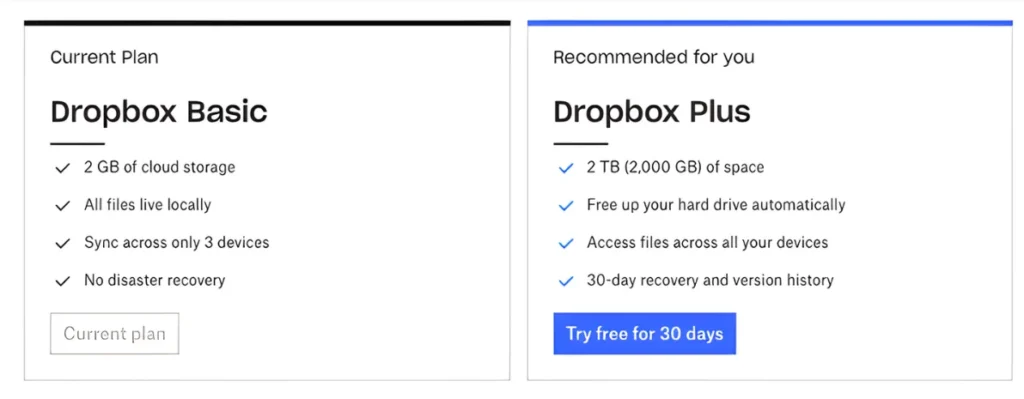
Example: Miro encourages expansion through team invites and board limits.
Implementation steps:
- Identify natural expansion triggers (usage, team invites)
- Design upgrade paths that feel like progress
- Surface expansion options contextually
- Reinforce value before prompting upgrades
- Monitor expansion conversion metrics
When expansion is built into the product, Expansion loops drive revenue without additional CAC.
This directly improves Net dollar retention, one of the most important SaaS growth indicators.
Strategy 8: Align Teams Around Product-Led Metrics
PLG requires cross-functional alignment. Product-led growth breaks down when teams operate in isolation. Alignment ensures a consistent user experience from first touch to expansion.

Example: Atlassian aligns product, marketing, and success teams around activation and retention metrics.
Implementation steps:
- Define shared metrics across product, marketing, and success
- Ensure all teams use the same product data
- Align roadmaps with activation and retention goals
- Encourage regular cross-team feedback
- Review PLG metrics at the leadership level
Strategy 9: Test, Learn, and Iterate Continuously
Product-led growth improves through consistent experimentation. PLG is not a one-time setup. Continuous iteration allows small improvements to compound into long-term growth.
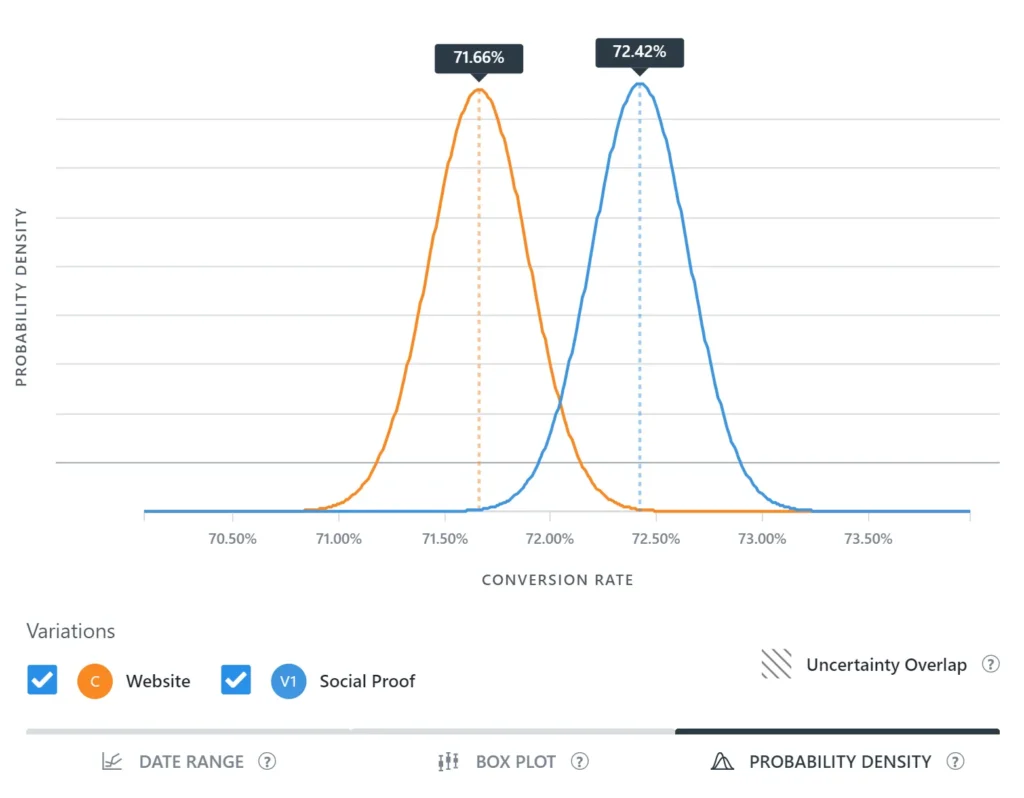
Example: Intercom regularly tests onboarding flows to improve activation rates.
Implementation steps:
- Test onboarding flows, pricing, and UX changes
- Change one variable at a time
- Measure impact on activation, retention, or expansion
- Document learnings and outcomes
- Scale successful experiments across the product
When Does a Product-Led Growth Strategy Make Sense?
A product-led growth strategy makes sense when the product can demonstrate value through usage, without relying heavily on sales interactions. It works best when users can explore, understand, and benefit from the product on their own.
Product-led growth is a strong fit when:
- The product is easy to try with minimal setup or technical effort
- Users can reach a meaningful outcome quickly
- The value of the product becomes clearer with continued usage
- The target audience prefers self-serve tools over sales-driven buying
- The product can support onboarding and education inside the experience
PLG is especially effective for SaaS products targeting small to mid-sized teams, where decision-making is faster and users want immediate results.
However, product-led growth may not be the right primary strategy when:
- The product requires long implementation cycles or deep customization
- Buyers need extensive approvals or negotiations before adoption
- The product’s value is difficult to show without human guidance
- Compliance, security, or enterprise constraints slow self-serve usage
In many cases, the most effective approach is a hybrid model, where product-led growth drives initial adoption and engagement, while sales and customer success support larger or more complex accounts.
Choosing product-led growth works best when the product experience can carry the responsibility of growth and when teams are ready to continuously improve that experience based on real user behavior.
Why Most PLG Strategies Fail
Most PLG strategies fail because teams focus on offering free access instead of fixing activation and retention.
Without strong product-market fit, clear value moments, and aligned pricing, sign-ups increase, but users never convert.
PLG only works when the product experience consistently drives real usage and expansion, not just trials.
How Do Teams Execute Product-Led Growth Strategies Together?
Product-led growth works only when teams are aligned around the product experience, not isolated goals.
Every team contributes to helping users reach value faster and continue getting results from the product.
Product Team
The product team owns how users experience value.
- Defines the core value moment and activation milestones
- Design features that reduce friction and improve usability
- Uses product data to prioritise improvements
- Continuously tests and refines onboarding and workflows
The product team ensures the product itself is capable of driving growth.
Customer Success Team
Customer success supports users after activation and drives retention.
- Helps users overcome blockers after onboarding
- Identifies usage patterns that signal churn or expansion
- Feeds real user insights back to the product team
- Supports upgrades and long-term adoption
Customer success ensures users continue seeing value beyond the first win.
UX Team
The UX team removes friction across the entire user journey.
- Improves clarity in onboarding and navigation
- Simplifies complex workflows
- Tests user flows to reduce confusion
- Ensures the product feels intuitive at every stage
UX plays a critical role in shortening time-to-value.
Marketing Team
Marketing brings the right users into the product.
- Sets expectations through clear messaging
- Attracts users who match the product’s ideal use cases
- Reinforces product value through content and education
- Supports product adoption with lifecycle messaging
Product-led marketing ensures the product is experienced by users who are most likely to succeed.
When these teams work toward shared activation, retention, and expansion goals, the product becomes the central growth engine. Misalignment creates friction, while collaboration turns user feedback into continuous improvement.
Product-led growth is not owned by one team; it’s a shared responsibility centered on delivering value through the product.
How to Measure Product-Led Growth (KPIs & Metrics to Track)
Product-led growth only works when the product experience translates into measurable outcomes.
Instead of focusing only on sign-ups or traffic, SaaS teams need to track how users move from first interaction to activation, retention, and expansion.
The right metrics reveal whether users are reaching value quickly, continuing to engage, and naturally upgrading over time.

Key PLG metrics to track:
- Activation Rate
- Time-to-Value (TTV)
- Product Engagement (feature adoption, usage frequency, workflow completion)
- Retention Rate
- Expansion Revenue
- Net Revenue Retention (NRR)
Struggling with Implementing a Product-Led Growth Strategy for Your SaaS?
Product-led growth is easy to understand but difficult to execute. Many SaaS teams struggle to decide where to start, what to prioritize, or which product issues matter most.
The real blockers aren’t tools; they’re unclear value moments, weak onboarding, misaligned pricing, and teams working toward different goals. Without clarity, even good products fail to activate and expand users.
If product-led growth strategies aren’t translating into clear product decisions, an outside review can quickly show what’s working and what’s blocking growth.
If you’d like, you can book a quick call or share your product details, and we’ll:
- Review your product through a product-led growth lens
- Identify key friction points affecting activation and retention
- Share a clear, actionable strategy for your SaaS stage
No pressure, just practical insight to help you move forward with confidence.
Final Thoughts
Product-led growth works best when treated as a long-term approach, not a quick fix. Sustainable growth comes from consistently improving how users experience value inside the product.
Instead of running scattered experiments, successful teams prioritize the strategies that directly impact activation, retention, and expansion. This focus keeps growth efforts aligned and measurable.
At its core, product-led growth starts with delivering value first. When users clearly understand how your product helps them succeed, growth follows naturally.
If you need support applying product-led growth strategies to your SaaS, contact us to move forward with clarity.
FAQ’s about Product-Led Growth
Do you need a freemium model to implement product-led growth?
Not necessarily. Many SaaS companies succeed with free trials instead of freemium, as long as users can experience value quickly.
What are common mistakes in product-led growth?
Common mistakes include unclear onboarding, slow time-to-value, pricing that doesn’t match usage, and teams working in silos without shared metrics.
How long does it take to see results from product-led growth?
Early improvements often appear in activation and engagement, while revenue and expansion gains take longer as usage compounds.
What Are the Core Product-Led Growth Strategies That Drive Results?
The core product-led growth strategies focus on reducing time-to-value, improving onboarding, aligning pricing with usage, and continuously improving the product experience. When these strategies work together, the product becomes the primary driver of sustainable growth.
How Can You Identify Which Product-Led Growth Strategies Will Have the Biggest Impact?
Start by analyzing activation drop-offs, onboarding completion rates, and feature usage data. The biggest impact usually comes from fixing points where users get stuck, disengage, or fail to reach value early.